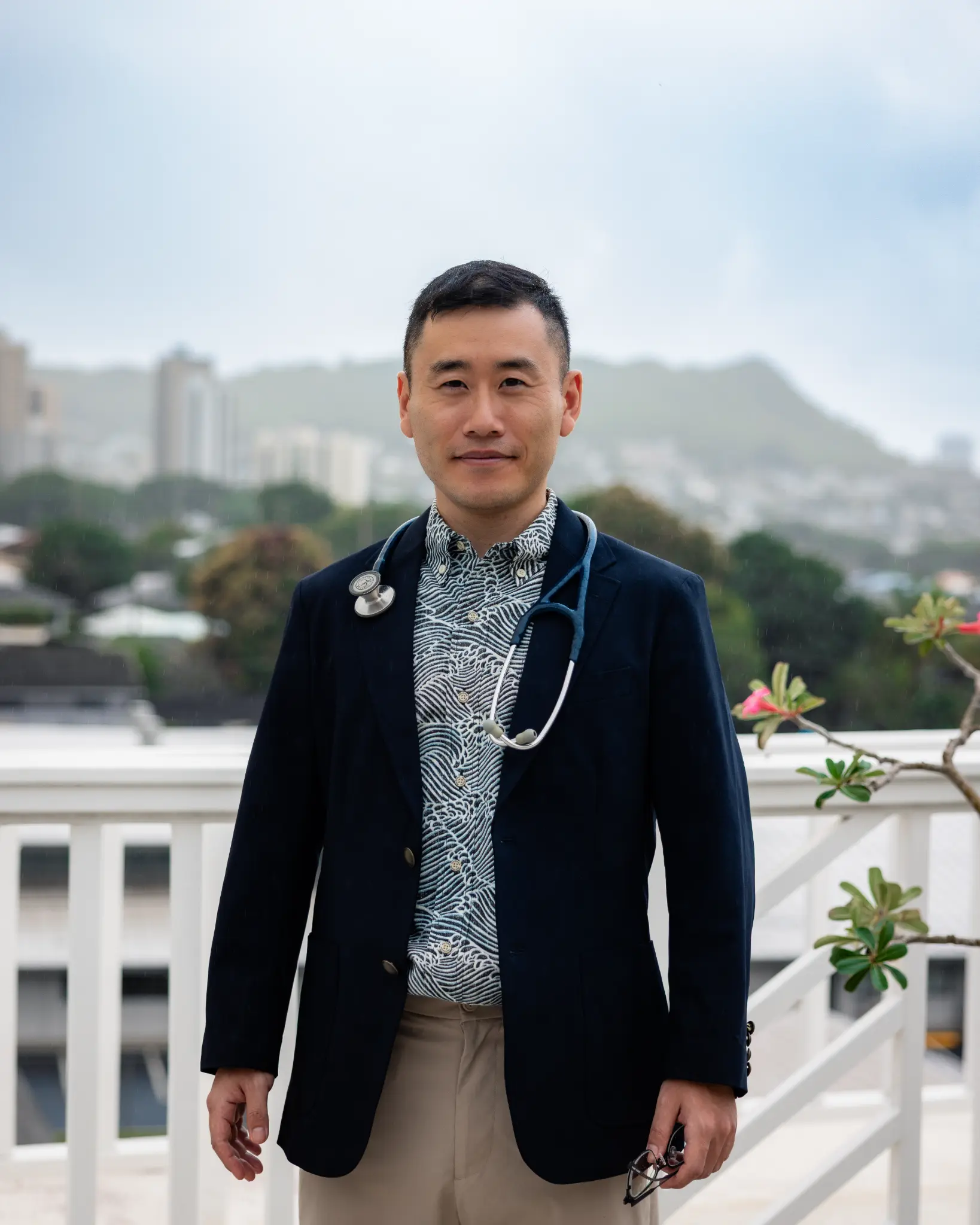
Hi everyone, I'm Dr. Ki. Many of my patients come to me telling a version of the same story:
"I'm okay. I've moved on. The hard part is over."
And yet — their chest is still tight. Their breath is still shallow. Their shoulders carry a tension that no massage can fully release.
If any of this sounds familiar, you may recognize yourself here:
"I tell myself I'm fine, but my body doesn't agree."
"My jaw is always clenched."
"Someone speaks in a cold tone, and I freeze before I can think."
"I want to rest, but my body doesn't know how."
"It feels like I forgot how to breathe properly."
You are not broken. Your body may simply be playing an old song.
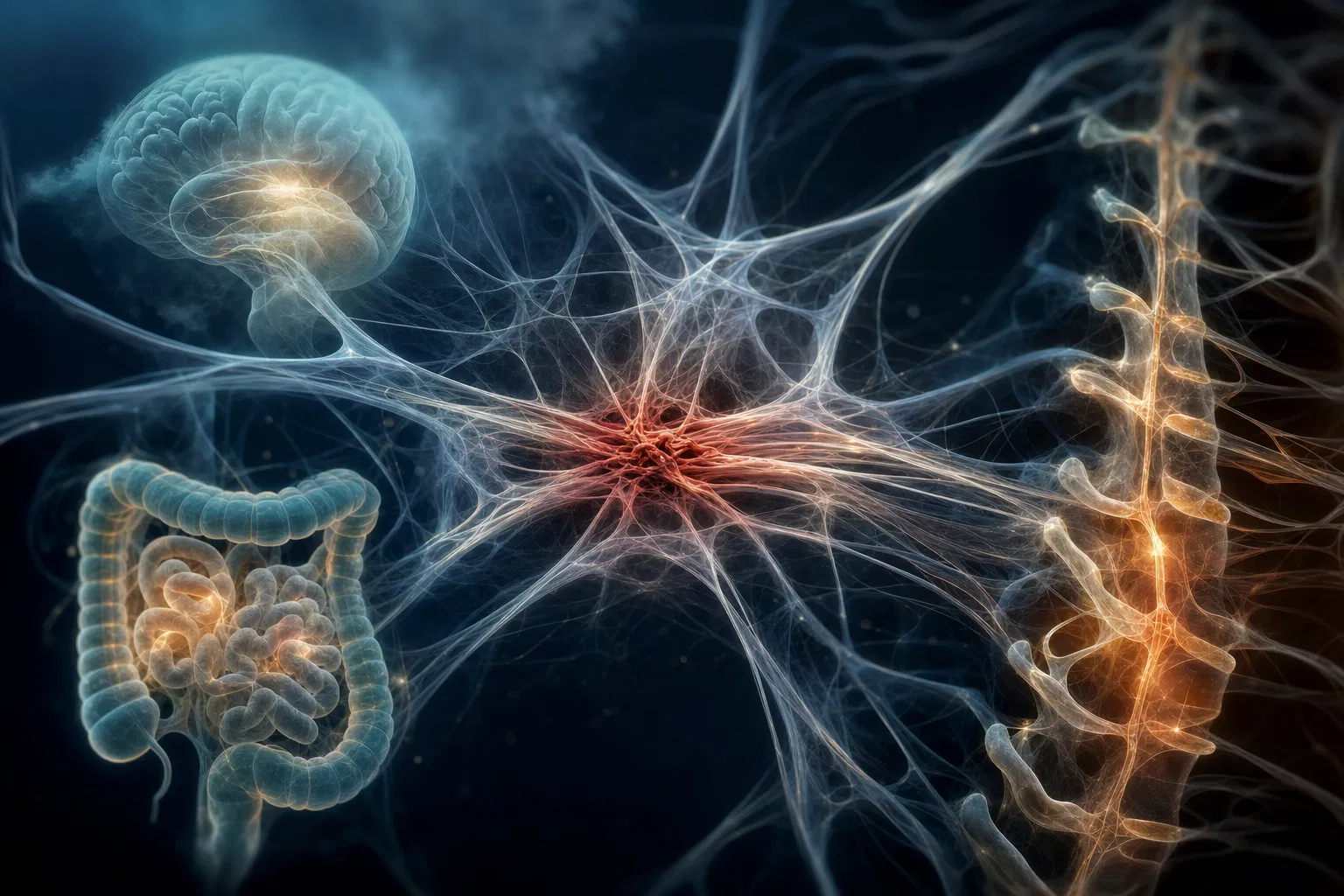
Today I want to talk about trauma — not as a memory in the mind, but as a pattern in the body. And more importantly, I want to share how healing happens when two pathways work together: top-down and bottom-up.
The Body Keeps the Score
You may have heard the phrase, "the body keeps the score." I find that idea profoundly true.
Past experiences don't just live in our thoughts. They live in the body — in our breathing, our posture, our fascia, our muscles, and most of all, in the autonomic nervous system. So when someone says "trauma," I don't only think of the event. I think about the pattern the body learned afterward.
Trauma can become the lens through which we relate to the world.
For some of my chronic pain patients, the tension built up over the years is so great that even a hug from their child can hurt. There are few things more heartbreaking than that for a parent.
Traditional Chinese Medicine has long taught that emotional and spiritual trauma stuck in the body becomes the seed of disease. The body and mind are deeply connected, and the body does not let every experience simply pass through without leaving a trace.
Your Body Is an Instrument
Here is a metaphor I keep coming back to. Imagine your body as a violin:
The bow
The Breath
The strings
Muscle & Fascia
The tuning
Autonomic Nervous System
The music
Consciousness
When I first learned to play violin as a child, the music sounded terrible. My arm was stiff, the bow was tense, the strings were out of tune, and I was so focused on the sheet music that I was mechanically commanding my hand. I was trying so hard, but no beauty came out — only tension and effort.
Then my teacher picked up the same violin, retuned it, and played the same piece. Suddenly, it was graceful. It was beautiful.
Same instrument. Different music.
The problem wasn't the violin. It was how it was being held, tuned, and played.
Our body works the same way. When trauma happens, the instrument can be tuned for survival mode for years. The nervous system stays in shock. The fascia and muscles remain braced. And the music that comes out — the music we live our daily lives by — leans toward fear, vigilance, and contraction.
Even when the mind tries to say "I am safe now," even when we repeat affirmations like "I am peace, I am love," the body may still be playing the old song.
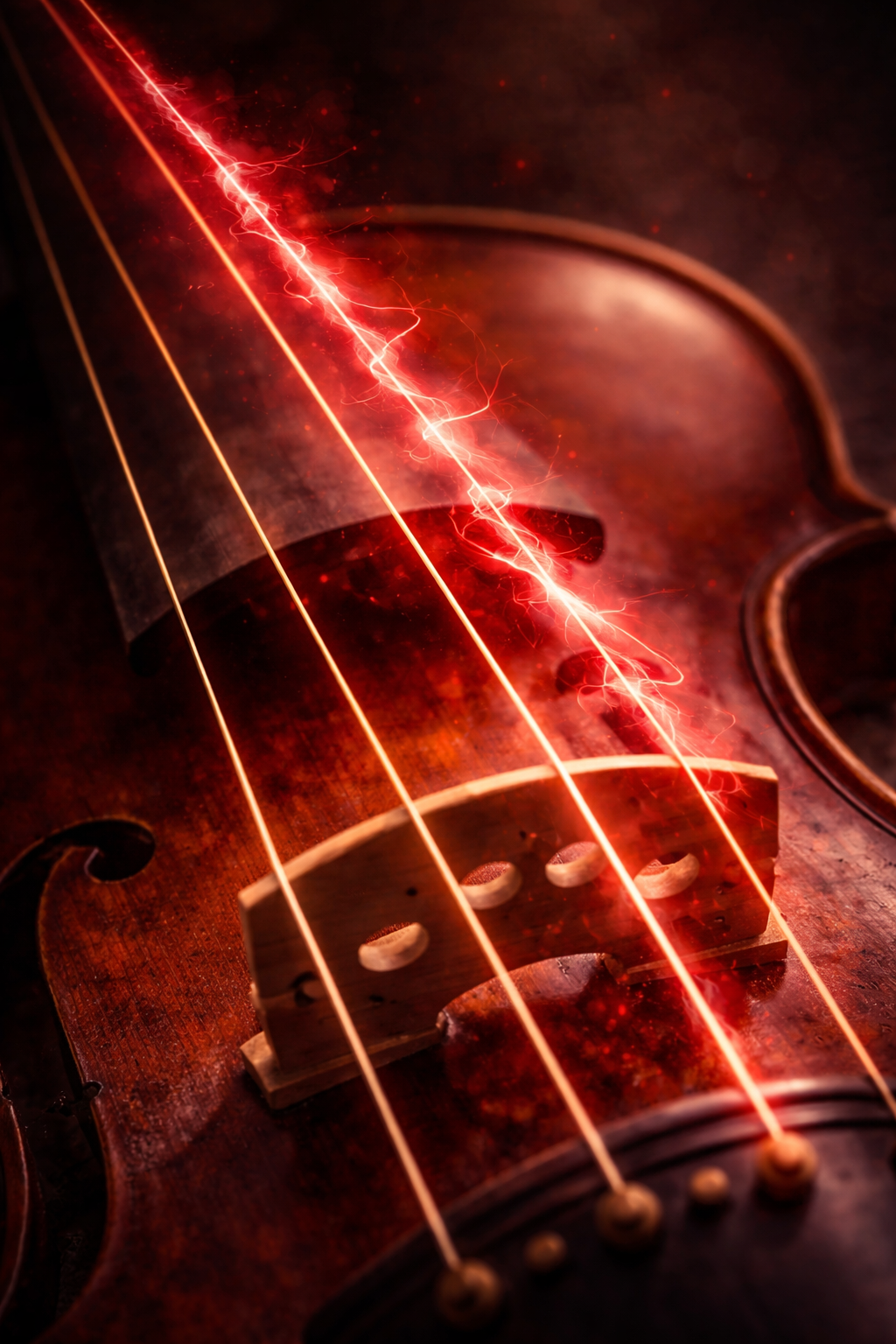
The Old Song
Fear · Survival · Contraction
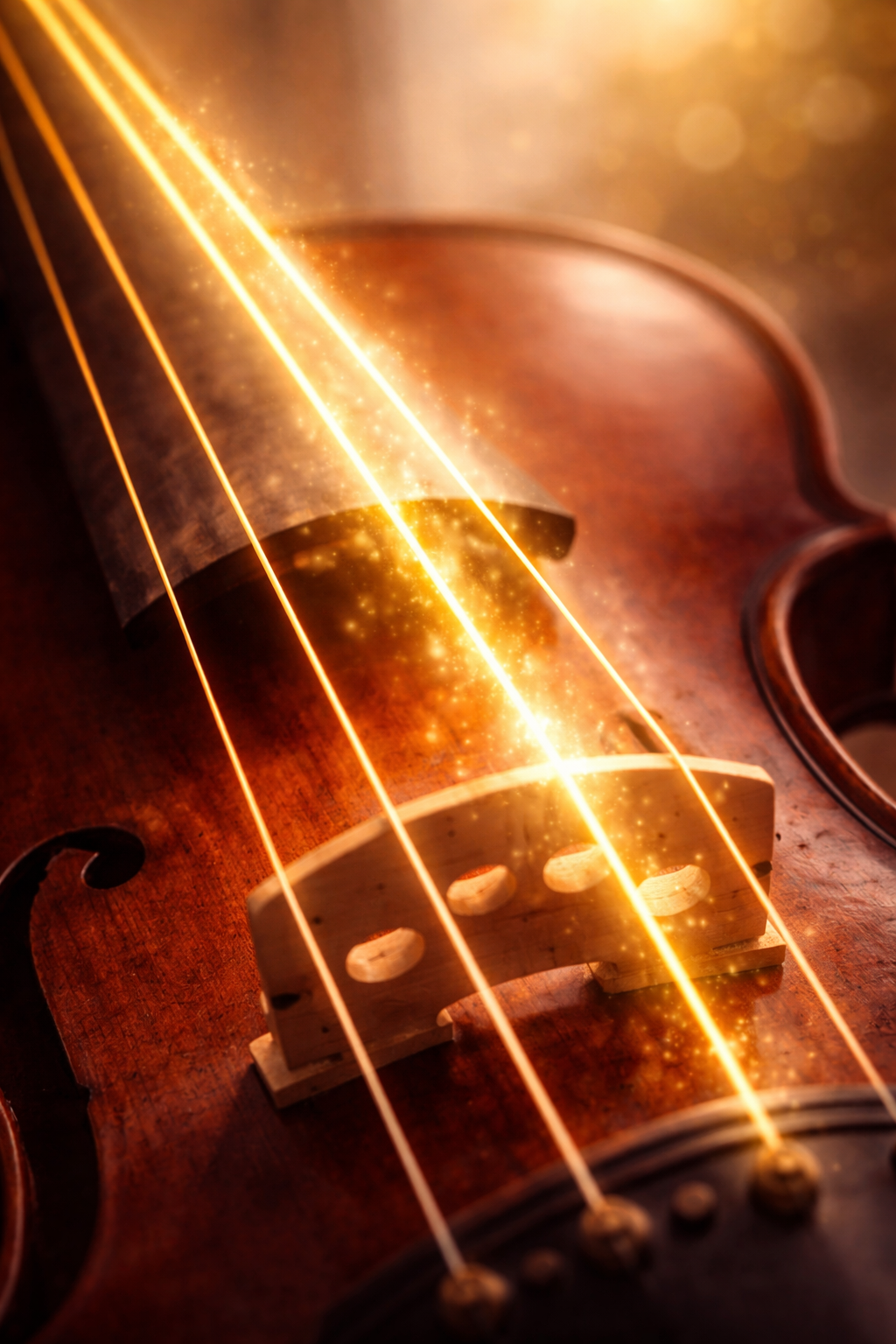
The New Song
Love · Safety · Expansion
Why Positive Thinking Isn't Enough
Many people ask me, "I pray. I meditate. So why does my nervous system still feel like it's in shock?"
Here is the answer, and it matters:
The thoughts may have changed, but the tuning of the body has not yet caught up.
In neuroscience, this is captured by Hebbian learning: neurons that fire together, wire together. When the body repeats the music of fear day after day, year after year, that song becomes deeply grooved into the nervous system. Eventually, fear plays automatically — even when you're sleeping, even when you don't consciously want it.
This chronic tension contributes to disease and accelerated aging. No surprise there.
But the same principle also gives us hope: neurons that no longer fire together, no longer wire together. When you begin to practice new patterns, new connections form. The old pattern of fear gets weaker.
Healing is not just changing your thoughts. It is teaching your body and nervous system a new song — and practicing it gently, repeatedly, until it sticks.
My Own Healing Journey
Let me get personal for a moment.
During my rheumatology fellowship, in the middle of the pandemic, I had a major mental breakdown. I was on call every other week, living in constant tension. I still remember the sound of my pager. The workload was overwhelming, my diet was poor, and I was alone — a new city, deep social isolation, real loneliness.
Research consistently shows that social isolation is one of the strongest predictors of poor mental and physical health. I lived that statistic.
I remember telling my friend Phil, "Tears keep coming for no reason. I don't even know what's happening to me."
My mother used to tell me when I was growing up that a man only cries three times in his lifetime. I think I cried more than three times that year alone.
Looking back, my trauma was not entirely a bad thing. It humbled me. It made me a better person and a better healer. It led me to learn the very things I now teach my patients.
The Two Pathways: Top-Down and Bottom-Up
To heal trauma stored in the body, we need both pathways working together.
Top-Down Healing
Mind → Body
- Therapy and counseling
- Prayer and meditation
- Transformative seminars
- Reframing childhood beliefs
Bottom-Up Healing
Body → Mind
- Slow, deep belly breathing
- Yoga and Tai Chi
- Acupuncture
- Earthing & warmth
1. Top-Down Healing: Rewriting the Story
Many of our deepest beliefs about ourselves — "I am not enough," "I am not lovable," "I have to stay in control to be safe" — were formed in childhood, often before we had words for what we were experiencing. According to inner child psychology, these beliefs can quietly sabotage adult life if we don't bring them into the light.
Top-down work helps us notice the cracks in those old stories and gently rewrite them. When you stop seeing yourself as "broken" and begin to understand yourself as "someone who has carried a lot for a very long time, but is still capable of change," that shift in meaning alone can begin to soften the body.
"A memory without emotional charge is wisdom." — Dr. Joe Dispenza
Healing is not about erasing the past. We can't change what happened. But we can transform pain into meaning, and pain into a lesson. We can let go.
A simple practice I often teach is Ho'oponopono, a Hawaiian healing prayer:
Ho'oponopono
Hawaiian Healing Prayer
"I'm sorry. I love you. Please forgive me. Thank you."
You can say it quietly to yourself, or — even more powerfully — share it with someone you love. It sounds simple, but it can move what's been stuck for decades.
And remember: the person who hurt you has often moved on. They may not even remember what they did. But if you keep replaying the painful movie in your head, your cortisol rises, your inflammatory markers (IL-6, TNF) climb, and the only person being harmed by the rewatching is you.
2. Bottom-Up Healing: Speaking to the Body Directly
Top-down work is powerful, but it has a limit. The body may still hold the old pattern even after the mind understands.
For some people, sitting meditation feels overwhelming at first. The body simply does not know how to find stillness. Sit still for fifteen minutes and the low back hurts, anxiety rises, and the mind spirals into a loop of pain and doubt.
I know this firsthand. I was a chronic pain patient for fifteen years. There was a time when one of my biggest fears was the barbershop — because you have to sit still.
For people like that — myself included — movement becomes the doorway to stillness. Sometimes the body needs to move before it can settle.
Yoga and Tai Chi are recommended in the American College of Rheumatology guidelines for rheumatoid arthritis. Mind-body movement supporting autoimmune disease is not a fringe idea — it is in the official guidelines.
When you breathe slowly into the belly, life's problems don't disappear. But the body receives a different message: "Maybe I don't have to run right now. Maybe this moment is safer than I thought." The mind softens. The emotions ease. Tunnel vision opens up into a wider view.
The Hidden Science: Fascia and the Piezoelectric Effect
Here is where the science gets beautiful.
Your fascia — the connective tissue that wraps every muscle, organ, nerve, and vessel — is rich in collagen. Collagen has a remarkable property called the piezoelectric effect: when it is stretched, compressed, or twisted, it generates tiny electrical changes.
You see the same principle in a kitchen lighter. A small crystal is struck mechanically, mechanical force is converted into electricity, and you get a spark.
When you stretch and twist your collagen-rich tissues through yoga or Tai Chi, you're not only changing structure — you may also be generating bioelectrical flow throughout the body. This is part of how acupuncture works, too. The acupuncturist twists the needle so collagen fibers wrap and stretch around it, creating subtle electrical signaling in areas of stagnation.
"Where there is flow, there is health. Where there is blockage, there is disease and pain." — Traditional Chinese Medicine
Modern biophysics is beginning to show us how that ancient wisdom may actually work.
We Heal in Community, Not in Isolation
This is the piece most healing models still miss.
People heal best in loving community.
This is not just a philosophical idea. Early neuroscience research suggests that when people meditate together, measurable synchrony can develop between their brains and nervous systems. Practitioners often report going deeper in groups than alone — and there may be physiology behind that experience.
The world's longest-living communities, like Okinawa and Sardinia, share one feature again and again: strong social bonds. We are social animals. Our nervous systems are wired to mirror each other.
Spend fifteen minutes with someone who has a calm nervous system, and you begin to feel calmer too. Sit beside someone deeply anxious, and your body tightens. We co-regulate whether we mean to or not.
This is one of the hidden gifts of a yoga or Tai Chi class. The teacher leads the breath and movement, and the room breathes together, moves together, regulates together. Without realizing it, you are being taught a new song — the music of love and safety — by the room itself.
You cannot learn love in isolation. Connection is part of the medicine.
Bringing It All Together
Imagine a patient with chronic stress, anxiety, neck pain, migraines, and gut issues.
Her mind may understand: "It is okay to rest now." But her body stays guarded — shallow breath, tight chest, tense abdomen.
Top-down healing gives the body a new message.
Bottom-up healing helps the body believe that message.
Together, they create coherence between brain and body. That coherence is healing.
One Small Action This Week
Healing rarely happens through one giant breakthrough. It happens through small, safe experiences repeated over time — the way investing in a retirement account compounds quietly until one day it has changed your life.
So after reading this, ask yourself: what is one small action I can take this week?
A gentle yoga or Tai Chi class
Five minutes of slow belly breathing
Walking barefoot on grass
Placing a hand on your chest and saying, "That was then. This is now."
Practicing Ho'oponopono with a loved one
What matters is not a perfect plan. What matters is giving your body one new experience of safety and love.
Healing is not perfection. It is a gradual, gentle process of creating space where fear used to live.
If you are going through something difficult right now, please remember this:
You are not broken. Your body is simply playing an old survival song. And the body can learn a new song — slowly, gently, through practice, through connection, and through love.
Stay Connected
Join the email list for more holistic healing insights — and be the first to know when Dr. Ki's practice opens in Orange County, California in Summer 2027.
Share this article